⚡ 24/7 Emergency Data Recovery — Engineer responds in 15–20 min · 1-888-749-3786
USB flash drives and SD cards

Flash & USB Recovery — From Broken to Back

If your USB drive snapped, your SD card shows errors, or your microSD is not recognized — do not assume the data is lost. Our engineers recover files from physically damaged and logically failed flash media every day.

96%
Success Rate
14+
Years Experience
24/7
Available
$450
Upfront · Credited
15-20 Min Response
Real engineer, never a bot
No Data, No Charge
On qualifying cases
Free UPS Both Ways
Fully insured in transit
Privacy-First Lab
PIPEDA compliant
$450 Assessment Fee
Upfront · credited toward recovery

Every Flash Media Format. Every Failure.

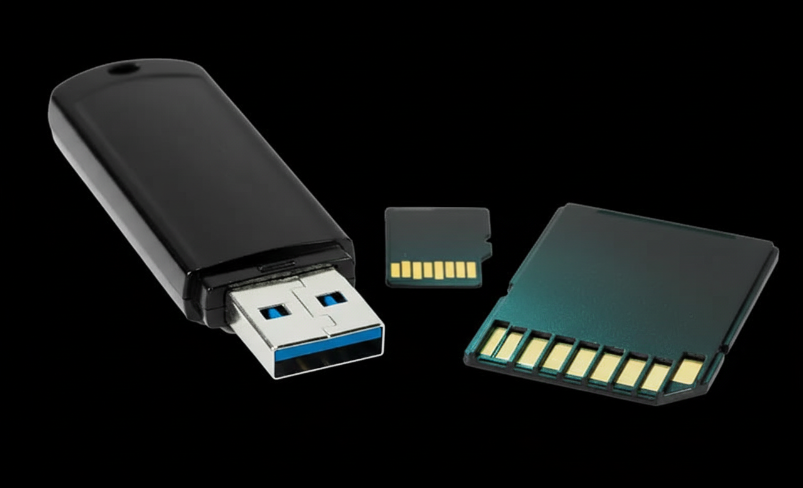
From a bent USB thumb drive to a cracked microSD from a drone crash, we recover data from all flash-based storage media — regardless of brand, capacity, or damage type.

USB Thumb Drives

The most common flash media we recover. Broken connectors, bent plugs, dead controllers, corrupted file systems, and water damage. From cheap promotional drives to high-end encrypted models — we recover data from all USB flash drives regardless of brand or capacity.

SD Cards

Full-size SD cards used in DSLR cameras, camcorders, and laptops. Common failures include corrupt file tables, write-protection lock errors, and physically cracked housings. We recover photos, videos, and documents from all SD card brands including SanDisk, Samsung, Lexar, and Kingston.

MicroSD Cards

Tiny but critical — microSD cards are used in smartphones, drones, action cameras, dashcams, and security systems. Their small size makes them especially vulnerable to physical damage. We use chip-off techniques to recover data from even the most severely damaged microSD cards.

CompactFlash (CF)

Still widely used in professional photography and industrial equipment. CompactFlash cards use a parallel interface with a different controller architecture than SD cards. We recover data from CF cards experiencing pin damage, controller failure, and logical corruption — including professional RAW photo files.

XD-Picture Cards

Legacy format used primarily in Olympus and Fujifilm cameras. While no longer manufactured, many photographers still have irreplaceable photos stored on XD cards. We maintain the specialized readers and tools necessary to recover data from this older format.

Memory Stick

Sony's proprietary flash format used in PlayStation Portable, older Sony cameras, and VAIO laptops. Memory Stick, Memory Stick PRO Duo, and Memory Stick Micro (M2) — we recover data from all Memory Stick variants using specialized readers and chip-off techniques when necessary.

Chip-Level Micro Recovery

Flash media stores your data on microscopic NAND cells smaller than a grain of sand. When the controller fails or the connector breaks, the data remains on the chip. Our engineers desolder the NAND memory, read it directly, and reconstruct your files — bit by bit.

What Our Clients Need Recovered

Flash media carries some of the most irreplaceable data: wedding photos, drone footage, school projects, and professional work. Here is what we recover most often.

Drone Footage

DJI, Autel, Skydio, and more. MicroSD cards from drone crashes, mid-flight failures, and formatting errors. We recover 4K video and flight logs.

Camera Photos

Wedding shoots, family vacations, professional portfolios. JPEG, RAW (CR2, NEF, ARW), TIFF — we recover all photo formats from corrupted or damaged memory cards.

CCTV & Security Footage

Security camera SD cards and DVR storage. Critical evidence for insurance claims, law enforcement, and investigations. We preserve chain of custody when required.

Professional Photography

Commercial shoots, event photography, real estate photos. When a CF or SD card fails mid-session, we recover every frame — including RAW files with full metadata intact.

Common Flash Media Failures We Solve

Flash media fails in ways that are unique to its construction — tiny connectors, fragile housings, and NAND controllers that can fail without warning. Here are the most common scenarios we handle.

Broken USB Connector

The most common USB drive failure: the connector snaps from the circuit board due to leverage, a fall, or being bumped while plugged in. The NAND chip is almost always undamaged. Our engineers repair the connection or desolder the NAND chip and read it directly using chip-off recovery. Do not attempt to solder it yourself — improper heat application can destroy the NAND.

Water Damage

USB drives and SD cards that have been through the washing machine, dropped in water, or exposed to humidity. Water corrodes circuit traces and connector pins, but the NAND flash chip is often undamaged. We clean, dry, and assess the damage — then repair the electronics or perform chip-off recovery. The critical rule: do not plug in a water-damaged device. Let it dry naturally and send it to us.

Corrupt File System

Your device is recognized by your computer but the files are inaccessible, show errors, or the card demands formatting. This is typically a logical failure — the file allocation table or directory structure has been corrupted. Causes include improper ejection, power loss during a write, or file system bugs. We image the device and reconstruct the file system to recover your data intact.

Accidental Formatting

You formatted the wrong SD card, or your camera reformatted the card unexpectedly. When flash media is formatted, the file system metadata is erased but the actual data blocks remain on the NAND. If no new data has been written since the format, recovery success rates are very high. Stop using the device immediately and contact us.

Ransomware Encryption

Flash drives connected to an infected computer can have their files encrypted by ransomware. Do not pay the ransom. In many cases, our engineers can recover the original unencrypted data from the NAND flash, especially if the ransomware only encrypted the file headers or if the original data was not fully overwritten. We assess every ransomware case individually.

What NOT to Do With a Damaged Flash Drive

  • Do not plug a water-damaged device into your computer — corrosion can cause shorts
  • Do not attempt to solder a broken USB connector yourself — heat damage can destroy NAND
  • Do not format when your computer prompts you to — this erases the directory structure
  • Do not use free recovery software on a physically damaged device — it can make things worse
  • Do not keep writing new data to a card that shows errors — every write reduces recovery chances

Chip-Off Recovery: How We Recover Data From Physically Destroyed Devices

When a flash device is too damaged for conventional recovery — the connector is ripped off, the circuit board is cracked, or the controller chip is fried — we turn to chip-off recovery. This is one of the most advanced data recovery techniques available, and it is what separates a professional lab from a software-only recovery service.

Here is how chip-off works: our engineers carefully desolder the NAND flash memory chip from the damaged circuit board using precision hot-air rework equipment. The chip is then placed in a specialized NAND programmer — a device that communicates directly with the raw silicon, bypassing the need for a working controller or circuit board entirely.

The raw data from the NAND chip is a scrambled, compressed, and error-coded stream of bits. Our engineers use proprietary algorithms to reconstruct the original data — unscrambling the bit order, applying ECC (error correction codes), and rebuilding the file system structure. The result is your files, photos, and videos — recovered from a device that appeared completely destroyed.

Chip-off recovery requires specialized equipment that costs tens of thousands of dollars, extensive training, and deep knowledge of NAND flash architectures from dozens of manufacturers. It is not something you can do at home or at a general computer repair shop. Our London, ON lab has been performing chip-off recovery for over 14 years, recovering data from thousands of flash devices that other labs have declared unrecoverable.
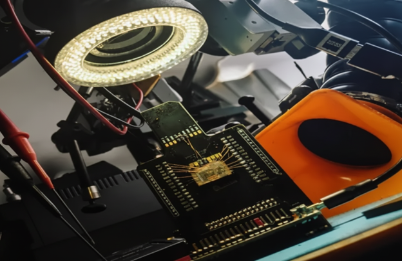
MicroSD card pin-out board showing chip-off recovery process

What We See Under the Microscope

When a damaged flash device arrives at our lab, the first step is a thorough visual inspection under high-powered magnification. We examine the circuit board traces, solder joints, connector pins, and the NAND chip itself for signs of physical damage, corrosion, or heat exposure.

For microSD cards — which are barely larger than a fingernail — this inspection requires surgical precision. The image to the left shows a microSD card mounted on our pin-out board, with individual pins connected to our diagnostic equipment. This allows us to communicate with the NAND flash chip at the electrical level, determining the exact failure mode before we decide on the best recovery approach.

Whether the failure is a broken trace, a corroded pin, or a dead controller, our engineers have seen it thousands of times over 14 years. We know exactly how to handle each failure type to maximize your chances of a successful recovery.

Pin-out board diagnostics for microSD and SD cards
Chip-off desoldering with precision hot-air rework
NAND programmer reads raw flash data directly
Proprietary data reconstruction algorithms
ISO Class 100 cleanroom environment

Send it in. We examine it. Your memories come back. Five straightforward steps.

01

Contact Us

Call 1-888-749-3786 or submit your case online. Describe what happened — broken connector, water damage, format error — and we will advise you on safe handling and shipping. A real engineer responds in 15-20 minutes.

02

Free Prepaid Shipping

We send you a free prepaid UPS shipping label. Pack your flash device securely — we provide specific instructions for small media like SD cards and USB drives. Fully insured both directions. Most devices arrive at our London, ON lab within 1-2 business days.

03

Lab Assessment

Our engineers inspect your device under magnification, test the electronics, and determine whether the failure is logical or physical. You receive a detailed diagnostic report, a list of recoverable data, and a complete quote — no surprises.

$450 USD upfront · credited toward recovery
04

Recovery Process

Once approved, we execute the recovery. For logical failures, we image the device and reconstruct the file system. For physical damage, we perform chip-off recovery — desoldering the NAND and reading it directly. You are updated at every stage.

05

Data Returned

We send you a full recovered file list for verification. Your data is returned on an encrypted external drive or via secure digital transfer — whichever you prefer. All copies are deleted from our systems upon your confirmation of receipt. Your photos, videos, and files — back in your hands.

How Pricing Works
Your $450 assessment fee is credited in full toward recovery.
The assessment fee covers real diagnostic work performed by our engineers — visual inspection, electrical testing, and NAND analysis. If you proceed with recovery, the full $450 is credited toward your total recovery cost. Backed by our No Data No Charge guarantee on qualifying cases.
Full $450 credited toward recovery cost
$450
Assessment Fee · Credited
Our Guarantee

Transparent pricing. Full protection. No Data No Charge on qualifying cases.

Flash media often carries irreplaceable memories — wedding photos, family videos, professional work. We understand the stakes. Every dollar of your assessment fee is credited toward recovery, and our No Data No Charge guarantee on qualifying cases means your investment is protected.

  • $450 USD assessment fee — paid upfront, fully credited toward recovery
  • No Data No Charge guarantee on qualifying cases
  • Full recovered file list sent before data is shipped
  • Free prepaid UPS shipping both ways — fully insured
  • All data deleted from our systems upon your confirmation
Start Your Flash Recovery →

Flash & USB Recovery FAQ

Yes, in most cases. When you format an SD card, the file system structure is erased but the actual data blocks usually remain intact on the NAND flash memory. A quick format only removes the file allocation table — your photos, videos, and files are still physically present on the chip. Even a full format may leave data recoverable depending on the card type and how much new data was written after formatting. The key is to stop using the card immediately and contact us at 1-888-749-3786.
Yes. Water damage often affects the USB connector and circuit board rather than the NAND flash memory chip itself. Our engineers clean and dry the components, assess the circuit board for corrosion, and attempt to repair the electronics. If the board is beyond repair, we perform chip-off recovery — desoldering the NAND chip and reading it directly. The most important thing: do not attempt to plug a water-damaged drive into your computer. Corrosion can cause short circuits that damage the flash memory. Let it air dry naturally and send it to our lab.
Yes. We regularly recover footage from DJI Mavic, DJI Mini, Autel EVO, Skydio, and other drone brands. Drone microSD cards are especially prone to failure due to vibration, extreme temperatures during flight, and the demands of continuous 4K/5.4K video recording. Whether the card stopped working mid-flight, was damaged in a crash, or shows errors when inserted into your computer, our engineers can typically recover the video files. We handle all common drone video formats including MP4, MOV, and manufacturer-specific formats.
Flash media recovery begins with a $450 USD assessment fee paid upfront. This covers comprehensive diagnostics performed by our engineers — including visual inspection, electrical testing, and NAND analysis. The full $450 is credited toward the total recovery cost if you proceed. Final pricing depends on the type of failure (logical vs. physical), the device type, and the complexity involved. Chip-off recovery for physically damaged devices typically costs more due to the specialized equipment and labour. We provide a complete quote after assessment with no hidden fees.
Chip-off recovery is our most advanced technique for physically damaged flash media. Our engineers physically remove (desolder) the NAND flash memory chip from the circuit board using precision hot-air rework equipment. The chip is placed in a specialized programmer that reads the raw data directly from the silicon — bypassing damaged controllers, broken connectors, and corroded boards entirely. The raw data is then reconstructed using proprietary algorithms to produce your recovered files. This technique requires equipment costing tens of thousands of dollars and years of training.
Yes. A cracked, bent, or broken SD card does not necessarily mean your photos are lost. The NAND flash chip inside is often completely undamaged even when the plastic housing is shattered. Our engineers extract the NAND chip using chip-off techniques and read the data directly. We recover photos in all common formats including JPEG, RAW (CR2, NEF, ARW, ORF, RAF), TIFF, and PNG. We also recover video files (MP4, MOV, AVI), documents, and any other data stored on the card.
Standard flash media recovery typically takes 2 to 5 business days after the device arrives at our lab. Logical failures — corruption, accidental formatting, or deletion — are often resolved within 1 to 3 days. Physical damage requiring chip-off recovery may take 5 to 10 business days due to the additional complexity of desoldering and data reconstruction. Emergency priority service is available for time-critical situations. Call 1-888-749-3786 to discuss expedited assessment.
Stop trying to connect it immediately. Repeatedly plugging in a failing USB drive can cause additional damage to the controller or NAND chip — especially if the failure involves a short circuit or electrical issue. Do not try different computers, do not attempt to format the drive when prompted, and do not use recovery software on a physically damaged device. The drive may have a failed controller, corrupted firmware, or a damaged connector that requires professional attention. Contact us and we will advise on safe handling and the best recovery approach for your specific situation.

Critical photos or footage at risk?

Do not attempt DIY recovery on physically damaged flash media. Our engineers respond in 15-20 minutes. Whether it is a wedding SD card, drone footage, or irreplaceable family memories — we handle it with the care it deserves.

Start Emergency Flash Recovery →

Independent data recovery laboratory. Data Recovery Group is not affiliated with SanDisk, Samsung, Kingston, Lexar, Sony, DJI, GoPro, or any other device manufacturer or OEM. All brand names, product names, and trademarks referenced on this page are the property of their respective owners and are used solely for identification purposes. References to these brands do not imply endorsement or affiliation.